
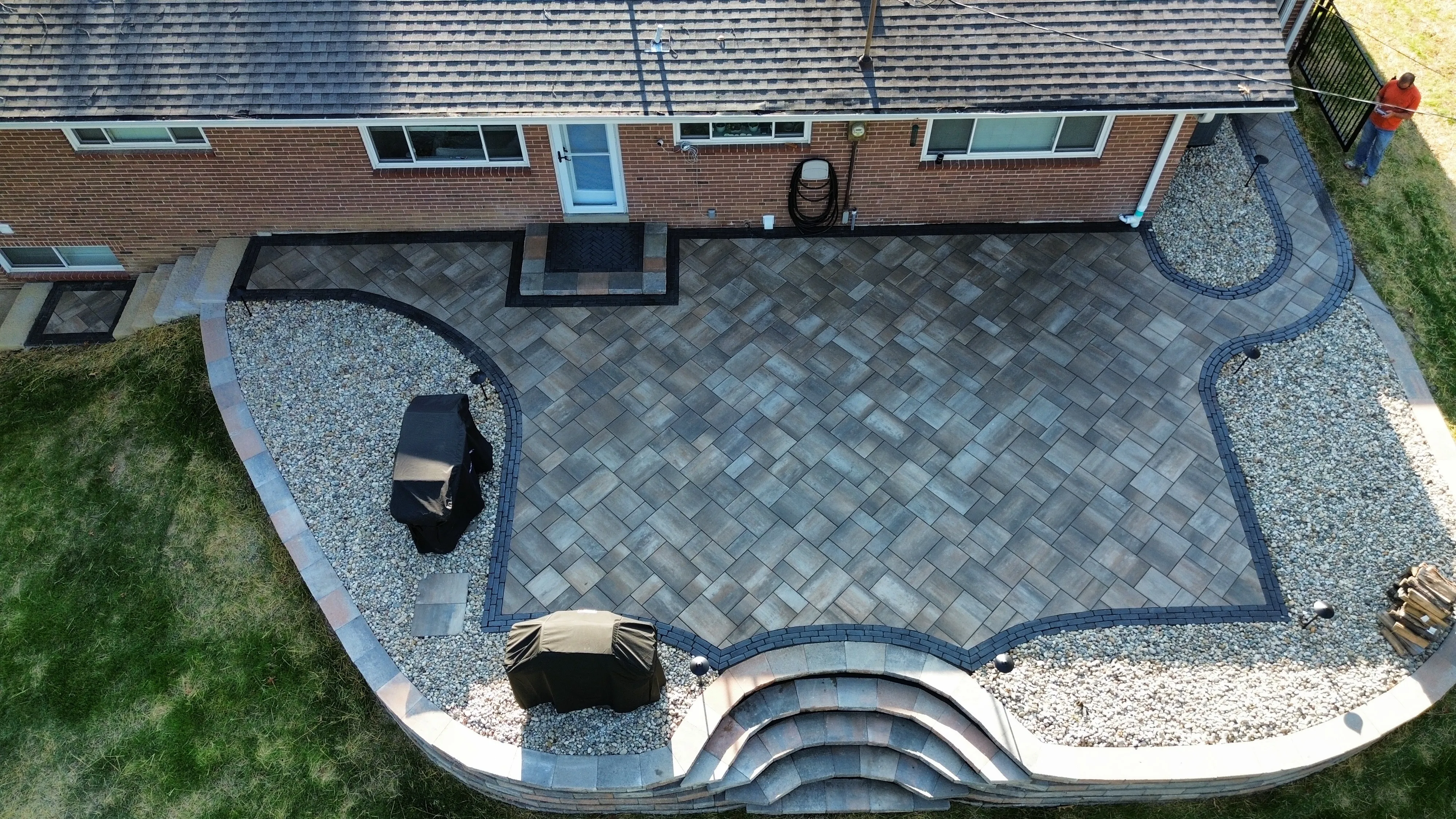
St. Louis hardscaping planning
A patio can look straightforward on a drawing while the route to build it is anything but. The narrow gate, air-conditioning unit, fence corner, overhead branch, steep side yard, or only available driveway space may determine equipment size, hauling effort, and which parts of the property need protection.
This checklist focuses on construction logistics for hardscaping, paver patios, retaining walls, and pool surrounds. It gives you a concrete way to compare proposals before work begins in St. Louis, Jefferson County, or St. Charles County.
Measure the Narrowest Point on the Route
Measure gates, side-yard openings, and pinch points between the house, fence, utility equipment, and landscaping. Note sharp turns, steps, low wires, roof overhangs, and branches. A wide space near the street does not help if the route narrows before the work area.
Photograph the Full Route, Not Only the Patio Area
Take photos facing both directions from the curb or driveway to the project. Include gates, pavement edges, air-conditioning equipment, meters, downspouts, trees, beds, and changes in grade. These views help explain what must be protected or temporarily moved.
Identify Utilities and Private Systems
Mark what you know about public utilities, irrigation, landscape lighting, private electric or gas lines, septic components, wells, drain pipes, and invisible dog fencing. Required locating and investigation should be completed through the appropriate services before excavation; the estimate should state who coordinates each item.
Choose a Material Staging Area
Pavers, wall block, aggregate, bedding material, and disposal containers need space. Ask where deliveries will be placed, whether driveway protection is included, which surfaces can carry the load, and whether vehicles or trash pickup will still have access.
Trace the Demolition and Haul Route
Old concrete, soil, roots, or failed base material must leave the property. Confirm how debris reaches the street, where it is loaded, and whether dust, mud, or wheel traffic affects walks, drives, neighboring property, or public pavement.
Protect Trees, Beds, Fences, and Existing Surfaces
Decide which features must remain undisturbed and which may be removed or reset. Mature tree roots, narrow beds, fence panels, irrigation heads, and adjacent paving deserve explicit notes. “Careful access” is less useful than a proposal that names the protection and restoration included.
Plan for Household Access During the Work
Discuss doors, driveways, pet routes, mail or deliveries, children, parking, and any mobility needs. If the front walk or only backyard gate is affected, confirm how the household will enter and which areas must remain closed.
Define Daily Site Condition and Final Restoration
Ask where tools and materials remain between work periods, how excavations are secured, and how weather delays affect the site. Final scope should identify cleanup plus repair of turf, beds, fence sections, drive edges, or other surfaces disturbed by access.
Put the Logistics in the Written Scope
A useful proposal identifies the approved access route, staging location, surface protection, removals, disposal, restoration, and exclusions. That makes the operational impact visible alongside the patio, wall, or walkway itself.
FAQ: Access and Staging Before Hardscaping
What access measurements should I take before a hardscaping estimate?
Measure the narrowest gate or side-yard opening, note overhead obstructions and sharp turns, and photograph the route from the street or drive to the work area. The contractor can then explain what equipment fits and whether temporary access changes are needed.
Where can hardscaping materials be staged?
Identify a stable area that does not block required access, damage protected landscaping, or place loads over utilities or private systems. The proposal should state the approved staging location and any surface protection or restoration included.
What should the proposal say about demolition debris and cleanup?
Look for the surfaces being removed, the haul route, disposal responsibility, dust or mud controls, daily site condition, final cleanup, and restoration of lawn, beds, fences, or pavement disturbed by access.
Does Green Operations serve areas outside St. Louis city?
Green Operations serves St. Louis, Jefferson County, and St. Charles County, Missouri. Access and staging should be planned for the specific property regardless of the county.