(314) 630-8814 Project Estimate
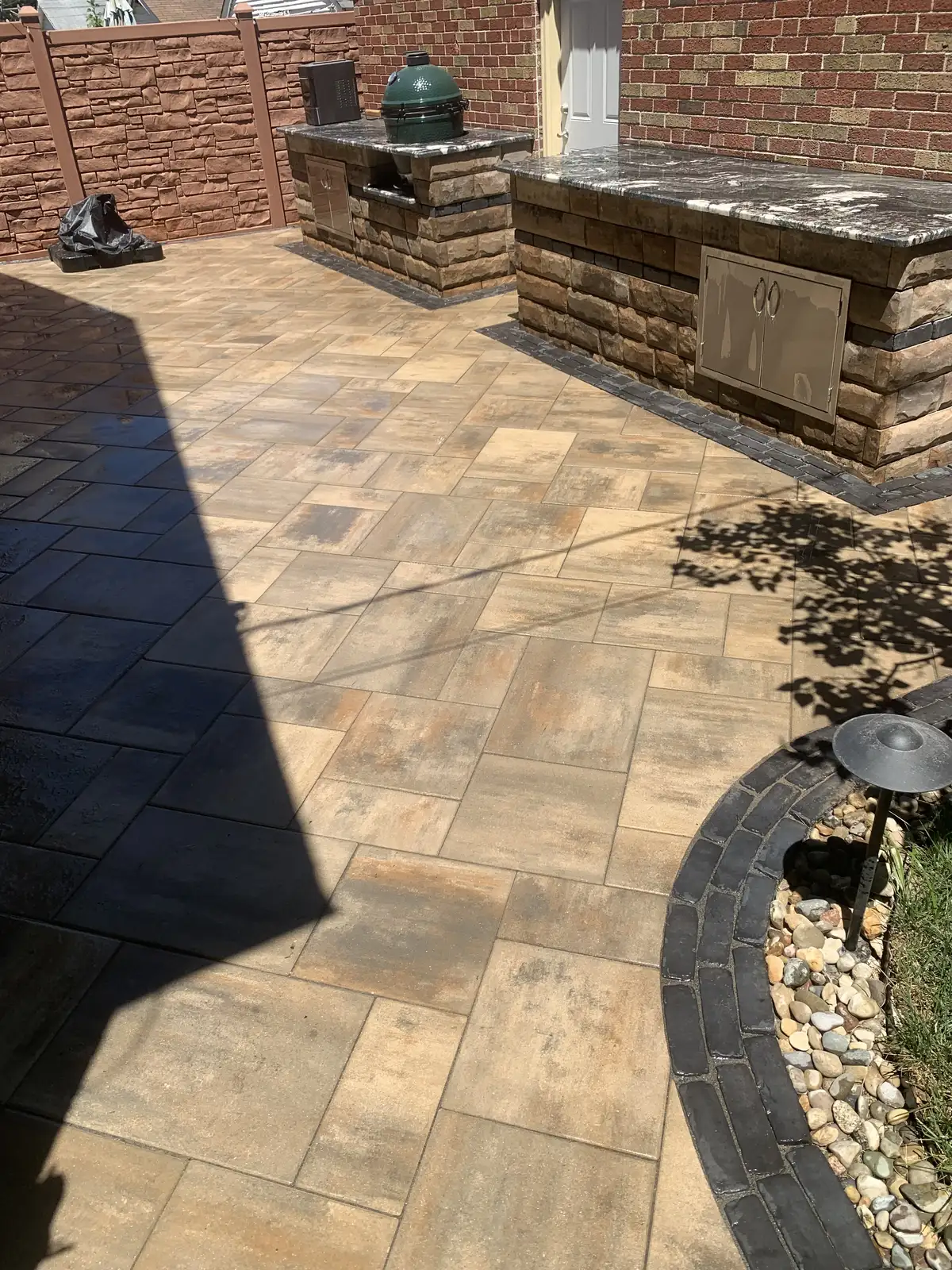
Custom paver patio with outdoor kitchen

Hardscaping Across St. Louis City & County

Plan a patio, driveway, walkway, or outdoor kitchen around the grade, drainage, access, architecture, and everyday use of your St. Louis property.

St. Louis Hardscaping Built on Local Hardscaping Considerations

St. Louis city and county include brick-lined neighborhoods, compact urban lots, mature trees, established drainage patterns, and larger suburban properties. A useful hardscape plan responds to the specific address rather than treating every yard the same.

Clay-rich soil can change volume as moisture conditions change, but the implications depend on the actual site, proposed use, drainage, and selected system. Excavation, aggregate, geotextile, compaction, pitch, and edge details should be determined for the project and documented in the proposal; no single recipe or lifespan applies to every St. Louis property.

Hardscaping Across St. Louis Neighborhoods

St. Louis neighborhoods include a wide range of home styles and lot patterns. In places such as Kirkwood and Webster Groves, a hardscape plan may need to respond to an older home's masonry, porch, walk alignment, mature trees, and established streetscape. Paver pattern, scale, and color should support the house rather than compete with it.

For properties in Ladue, Frontenac, and Clayton, compare the actual lot depth, home scale, access, existing masonry, trees, and drainage before deciding whether a broad patio, connected gathering areas, or driveway work fits the property.

In Creve Coeur, Ballwin, Chesterfield, Wildwood, and Town and Country, the useful questions are still property-specific: how you want to use the yard, where water moves, what grades and wooded edges affect access, and whether a patio, pool deck, walkway, or retaining wall belongs in the scope.

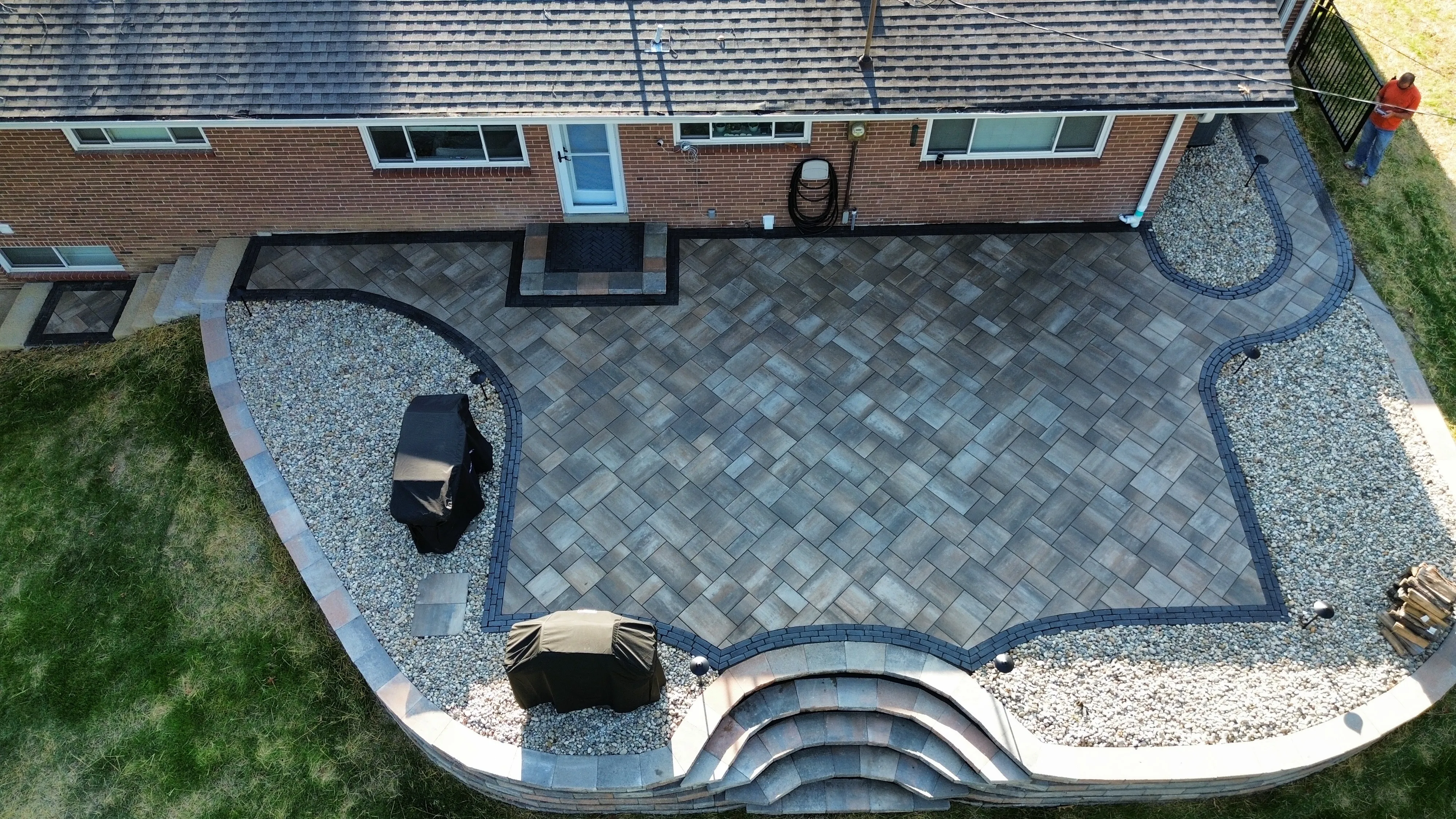
Aerial view of large paver patio with accent band

City Permits and Urban Site Challenges in St. Louis

Some St. Louis city lots have narrow side access, limited staging, nearby structures, or on-street delivery constraints. For the specific address, verify property boundaries, utilities, parking or right-of-way rules, historic-district review, and other current requirements that could affect the work.

St. Louis County municipalities maintain their own permitting, engineering, and stormwater requirements. Confirm the current rules for the project address and scope before construction; the proposal should state who is responsible for applications, drawings, fees, and inspections.

Urban properties can also have constrained access, closely spaced structures, existing downspouts, and limited locations for runoff. The drainage plan should identify finished slopes and outlets and determine whether surface grading or a drainage component is appropriate for the actual site.

Hardscaping FAQ for St. Louis Homeowners

Permit and engineering requirements depend on the municipality, wall height and location, drainage impact, property constraints, and total scope. Confirm the current requirements for your address with the local authority before construction; your written proposal should identify who is responsible for applications and approvals.

Clay-rich soil can change volume as moisture changes. The appropriate excavation, aggregate, geotextile, compaction, drainage, and edge details depend on the actual soil, grade, loads, access, and selected system. Ask for those project-specific decisions in writing rather than relying on a universal depth or recipe.

We serve all of St. Louis city and county, including Kirkwood, Webster Groves, Ladue, Clayton, Creve Coeur, Ballwin, Chesterfield, Wildwood, Town and Country, Des Peres, Frontenac, University City, Brentwood, Maplewood, Richmond Heights, Fenton, Sunset Hills, Oakville, and all surrounding communities. We also serve Jefferson County and St. Charles County.