
A clearer project starts with clearer questions
Booking a hardscaping project is easier when the estimate answers the decisions that matter after the finished surface goes in. The layout must work for daily use, the preparation must suit the site, water needs a safe path, and the written scope should make it clear what the price covers.
Those details are especially important around St. Louis, where clay-heavy soil, grade changes, runoff, mature landscapes, and freeze-thaw weather can affect patios, walkways, retaining walls, and pool decks. Green Operations provides hardscaping services throughout the St. Louis service area. Use the questions below to prepare for a site visit and compare proposals on more than appearance alone.
Before you book: make sure you understand the finished layout, the below-surface preparation, the drainage approach, the complete scope and exclusions, the expected sequence, and the care the surface will need.
What problem should the hardscaping solve?
Begin with what is not working now. You may need a level dining area, a safer route from the driveway, steps through a grade change, a wall that creates usable space, or a pool deck with better circulation. The answer shapes the footprint and helps separate a single feature from a larger outdoor living plan.
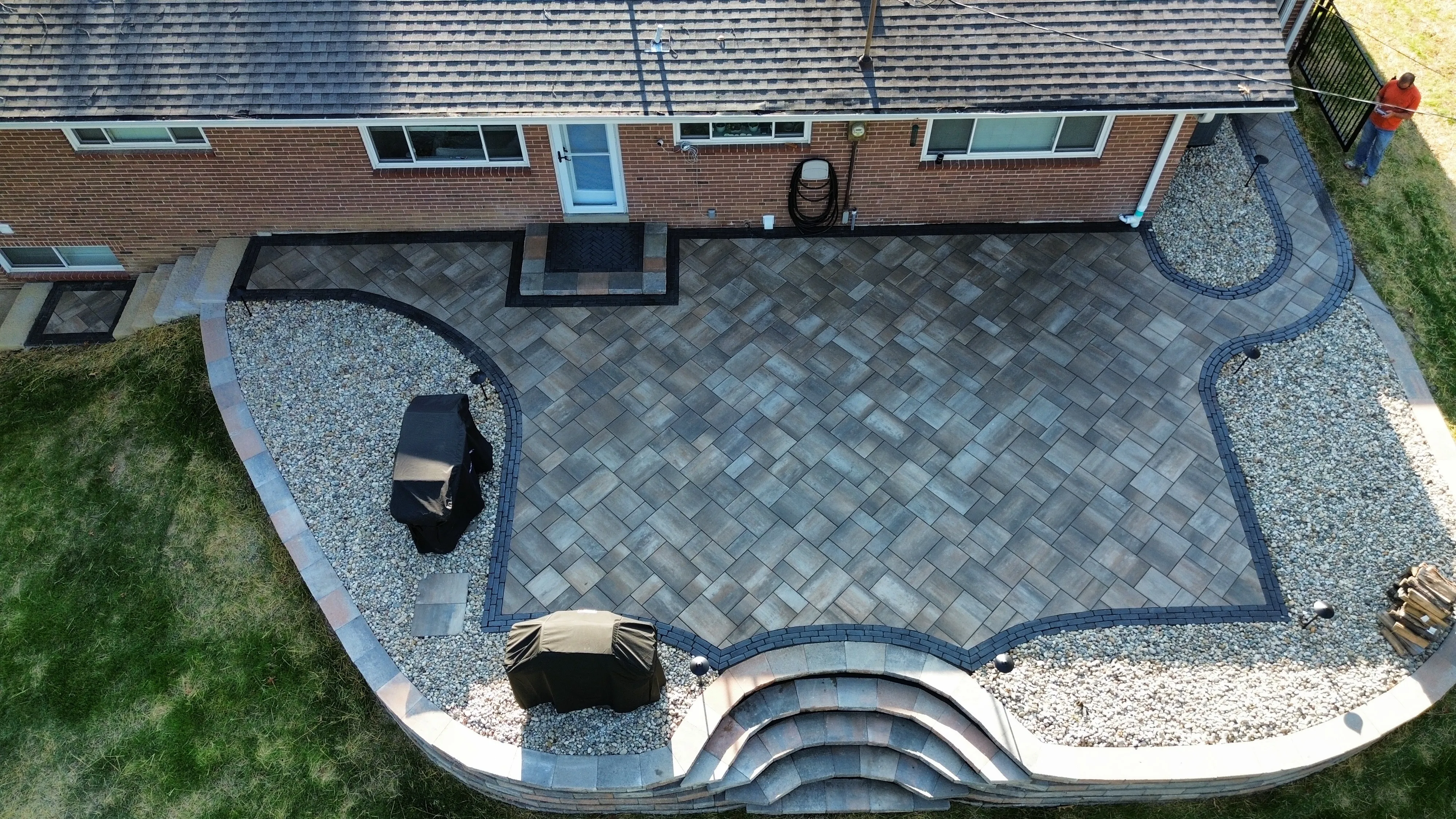
Describe furniture sizes, door swings, grill placement, foot traffic, accessibility needs, and future ideas. A paver patio planned around a dining table needs different clearances than a quiet seating area. A retaining wall may need to manage grade, frame steps, create a terrace, or combine those jobs. Settling the purpose first keeps material selection from driving the plan.
Which site conditions will shape the project?
Ask the contractor to look beyond the proposed outline. Existing concrete, downspouts, low areas, utilities, slopes, tree roots, fence gates, neighboring structures, and transitions at the house can all affect the work. Photos after a heavy rain can be useful when puddles or runoff patterns are not visible during a dry appointment.
Access matters too. Gate width and side-yard grade influence how demolition material leaves the property and how aggregate, wall units, or pavers reach the work area. Ask which route will be used, what needs to move, what will be protected, and whether lawn or landscape restoration is included.
How will the base and drainage be handled?
The visible paver or wall unit is only one part of the assembly. The proposal should explain removal, excavation, base material, compaction, edge restraint, joint material, and the approach to transitions. For a wall, ask about the prepared footing, drainage stone, backfill, and the conditions that determine whether additional reinforcement is needed.
Every new hard surface also changes how water moves. Ask where the surface will pitch, how downspouts and adjoining grades are addressed, and where runoff will go without creating a problem near the house, a walkway, or a neighboring property. Not every project needs a separate drain, but every project needs a considered plan for water.
What makes one hardscaping proposal cost more than another?
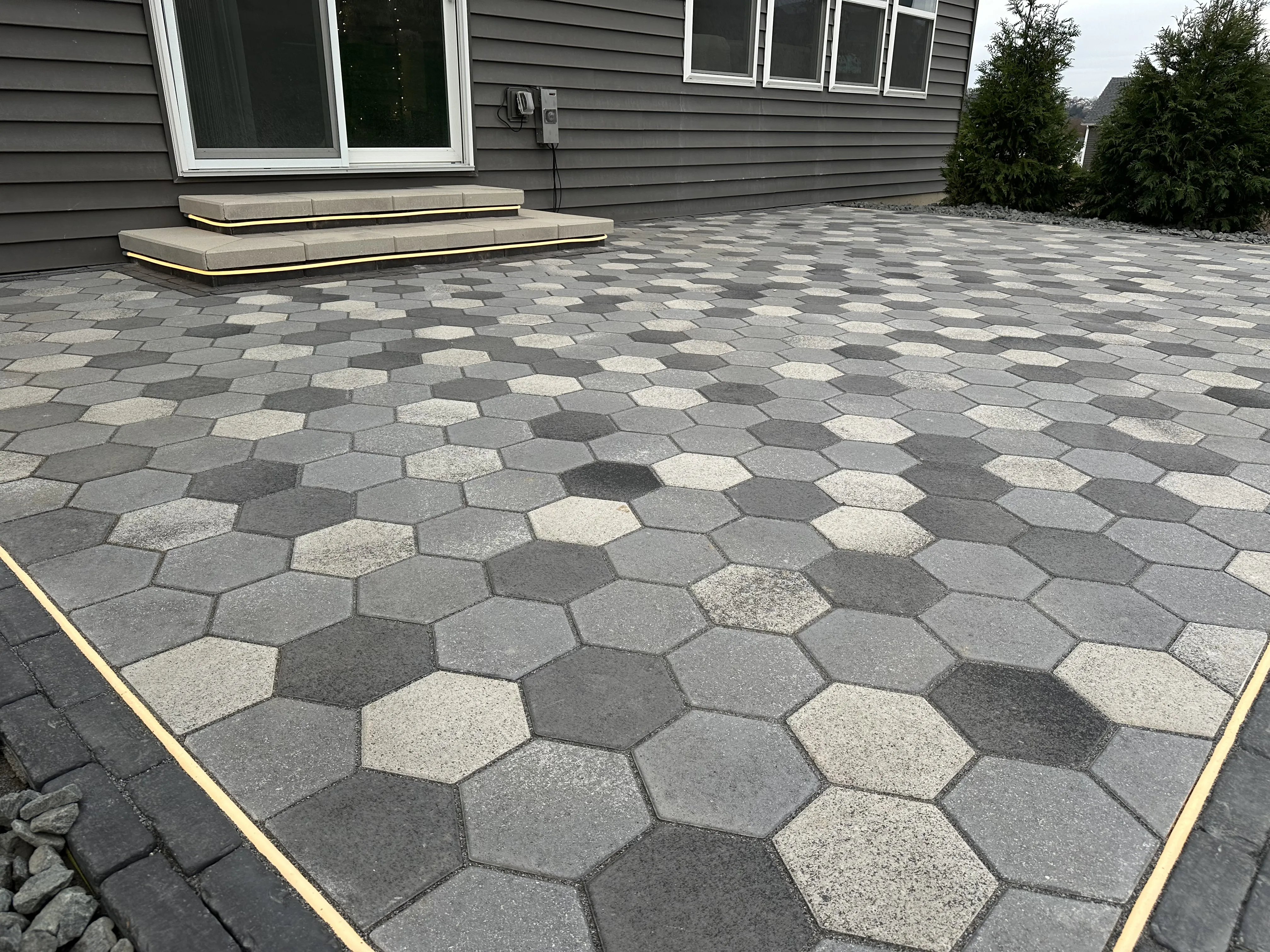
There is no single cost driver for every yard. Demolition, tight access, excavation, base preparation, drainage, steps, walls, utility coordination, material choices, pattern complexity, cleanup, and restoration can all change the scope. The most expensive part of one project may be site preparation; on another, it may be a structural wall or a feature-heavy finish plan.
An hourly rate or square-foot figure by itself cannot show whether two contractors are pricing the same work. Compare the written details: removal and hauling, preparation, materials, borders, edge restraint, joint treatment, drainage measures, permits or utility work, cleanup, restoration, and exclusions. Ask how changes will be documented if an unknown site condition or a new selection affects the price.
What schedule should you expect?
Instead of asking only for a finish date, ask for the sequence. Design choices, material availability, permits where applicable, utility coordination, demolition, excavation, base work, wall or step construction, paving, cleanup, and restoration may each affect timing. Weather and site access can also change the pace.
A useful schedule discussion identifies what must be decided before work begins, what may cause a pause, and which areas of the property will be unavailable during construction. For connected features such as an outdoor kitchen, lighting, or a future fire feature, early utility planning can keep the first phase from needing to be reopened later.
What do the warranty and product terms actually cover?
Ask for warranty information in writing and distinguish among product coverage, manufacturer programs, and the contractor’s workmanship terms. Note the length of each applicable term, exclusions, required maintenance, and the process for reporting a concern. A broad promise in conversation is harder to evaluate than specific written coverage.
Material credentials can help you understand product options, but they do not replace a site-specific scope. Green Operations is an Unilock paver service; the estimate conversation should still explain how the selected system, preparation, drainage, and finish details fit your property.
What maintenance will the finished hardscape need?
Hardscaping is durable, but it is not maintenance-free. Ask how to clean the surface, protect joints and edges, handle leaves or organic growth, respond to stains, and choose winter products that are appropriate for the installed material. Keep drainage paths open and check whether water movement changes after major storms or landscape work.
Watch for joint loss, spreading movement, persistent standing water, or edges that no longer feel secure. Addressing a small condition early may keep it from affecting a larger area. If an existing paver surface needs cleaning, joint attention, or protection, Green Operations also offers paver cleaning and sealing.
Frequently asked questions
What should I ask a hardscaping contractor before getting an estimate?
Ask how the proposed layout supports the way you will use the space, how drainage and grade will be handled, what preparation is included below the surface, how access affects the work, what is excluded, and what maintenance will be expected.
Why do soil and drainage matter for St. Louis hardscaping?
Clay-heavy soil, runoff, slopes, and freeze-thaw weather can influence movement and water management around a patio, walkway, retaining wall, or pool deck. The site plan should account for existing grade, downspouts, adjoining surfaces, and a safe direction for water to move.
What makes the cost of a hardscaping project vary?
Project cost can change with demolition, access, excavation, base preparation, drainage, walls or steps, utilities, material selection, layout complexity, cleanup, and landscape restoration. Compare written scope and exclusions instead of relying on one hourly or square-foot figure.
How long does a hardscaping project take?
Timing depends on project size, site access, demolition, walls or utilities, material availability, required approvals, and weather. Ask for the expected sequence and which items must be resolved before the start date rather than assuming one timeline fits every project.
Does hardscaping need regular maintenance?
Yes. Appropriate care varies by surface, but homeowners should generally keep drainage paths clear, clean spills promptly, watch joints and edges, remove organic growth with surface-appropriate methods, and address movement or drainage changes before they spread.