
How Much Does a Paver Patio Cost in St. Louis?
A paver patio estimate should account for the usable size, demolition, access, grade, drainage, base and edge details, selected paver, pattern, borders, steps, and any features tied into the surface. This guide explains how those decisions shape the budget.
Patio pricing changes with the work area, demolition, access, excavation, grading, drainage, material, pattern, borders, steps, walls, utilities, and restoration. Use the comparisons below to define scope before requesting current project estimates.
How Patio Size Changes the Project Scope
A larger patio uses more material, but size alone does not determine the estimate. The layout, access, demolition, grade changes, edges, steps, and connected features can make two patios with similar footprints very different projects.
| Patio Plan | Typical Use | Scope Questions to Resolve |
|---|---|---|
| Compact seating patio | A small table, grill, or conversation area | Door clearance, furniture fit, access, edges, and connection to the yard |
| Dining and grilling patio | Separate cooking, dining, and walking space | Circulation, grill clearance, pattern, border, drainage, and utility needs |
| Multi-zone patio | Dining, lounging, and a fire or cooking feature | Transitions between zones, cuts, steps, walls, grade, and material delivery |
| Connected outdoor living plan | Patio plus kitchen, walls, lighting, pool deck, or future phases | Overall elevations, drainage, utilities, permits, staging, and phased connections |
Patio size matters, but layout efficiency matters too. Dining, circulation, door swings, grill clearance, steps, and furniture dimensions should define the useful footprint before materials are priced.
What Affects the Cost of a Paver Patio?
Square footage is only the starting point. The final estimate also depends on demolition, equipment access, excavation, grade and drainage, base and edge requirements, the selected paver and pattern, borders, steps, walls, utilities, and restoration outside the finished patio.
Material Selection
The paver line, color, texture, size, pattern, border, availability, delivery, and installation requirements all affect cost. Compare current product documentation and physical samples for the actual application.
Design Complexity
Straight layouts and repeating patterns generally require fewer cuts than curves, inlays, tight borders, or pattern changes. Ask the proposal to identify any added cutting, material allowance, or layout work associated with the design you select.
Base Preparation
Base preparation affects both scope and cost. Excavation, aggregate, geotextile, compaction, bedding, and edge details should respond to the product, intended use, loads, soil, grade, drainage, and existing conditions rather than a universal depth.
Drainage Requirements
Existing low spots, downspouts, slope, soil, and neighboring surfaces affect where water can move after the patio is installed. Depending on the site, the scope may need grading changes, drains, or other measures. The proposal should explain the selected approach and where runoff can discharge safely and lawfully.
Additional Features
Many homeowners combine their patio with additional hardscaping features that increase the total project cost:
- Seating walls: Length, height, caps, curves, corners, and support requirements shape the scope.
- Fire feature: Product, fuel, utilities, clearances, seating layout, and local requirements need to be defined.
- Outdoor kitchen: Island size, appliances, counters, utilities, storage, and access can materially change the estimate.
- Steps and stairs: Elevation change, width, landings, rails, lighting, and transitions affect the work.
- Retaining walls: Height, length, grade, drainage, soil, engineering needs, access, and selected system matter.
- Landscape lighting: Fixture count, controls, transformer, wire routes, mounting, and existing power affect the plan.
Patio Material Planning Comparison
Material prices and availability change, and the surface is only one part of the installed system. Use this comparison to ask better questions before requesting current product and project pricing.
| Material | Design Character | Estimate Variables | Questions for Long-Term Care |
|---|---|---|---|
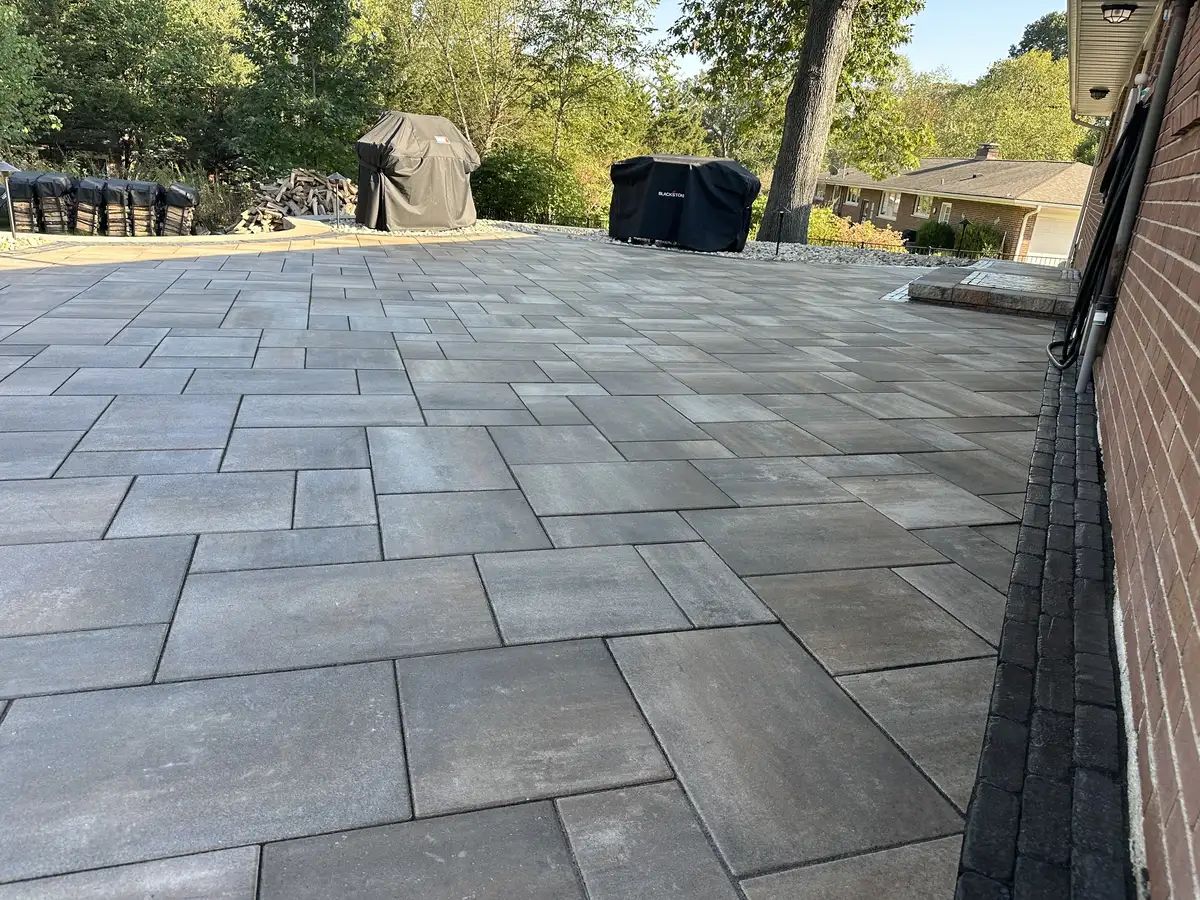
| Concrete pavers (Unilock) | Many sizes, textures, patterns, and border combinations | Product line, pattern, cuts, borders, delivery, base, edges, and joint material | Ask about joint upkeep, cleaning, optional sealing, and replacement-unit availability |
| Natural stone | Natural color and texture variation with irregular or dimensional layouts | Stone type, thickness, sorting, cutting, support system, joints, and delivery | Ask how the selected stone handles staining, freeze-thaw exposure, and repairs |
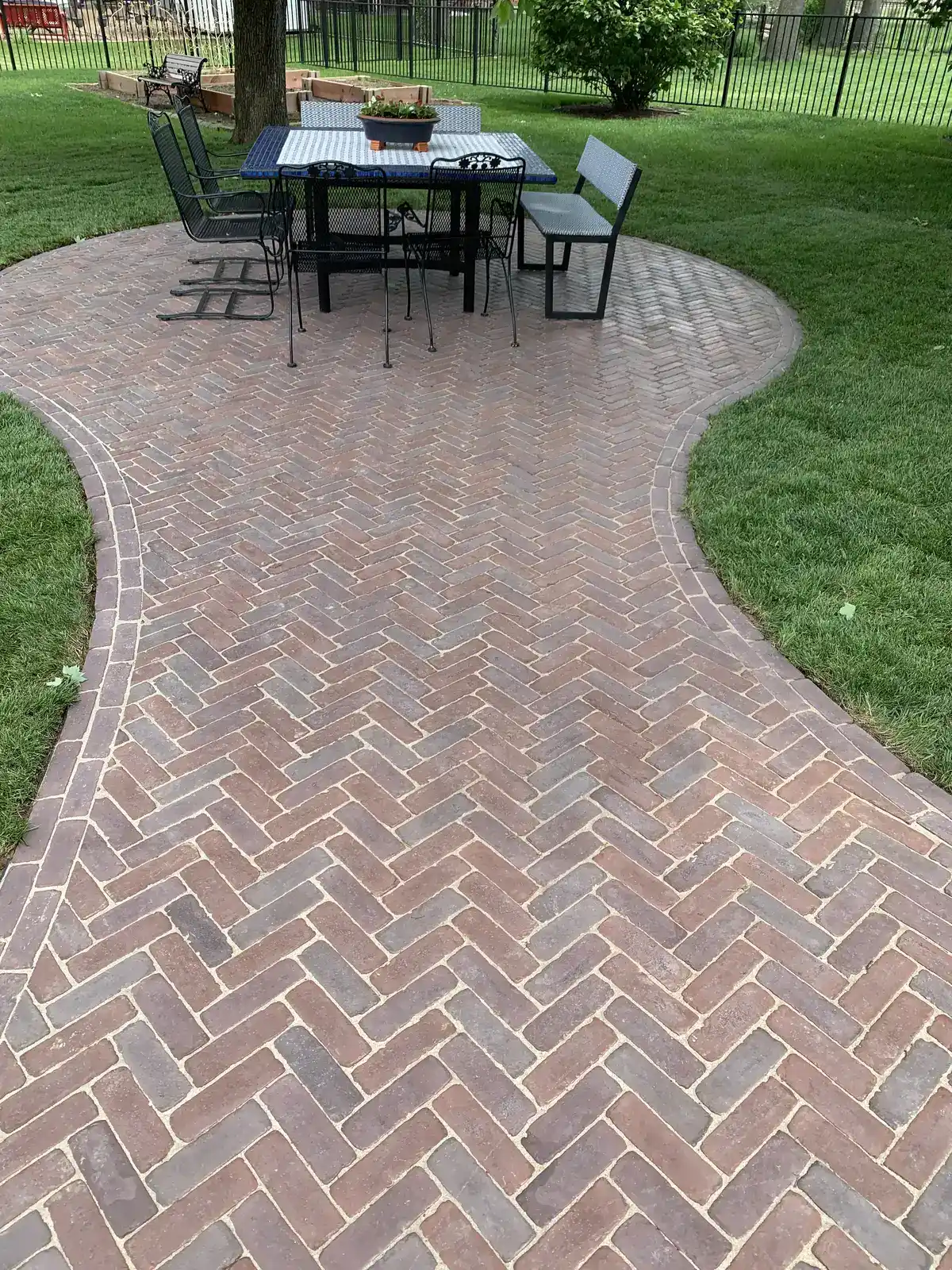
| Brick pavers | Traditional scale suited to running bond, basket weave, or herringbone patterns | Brick type, pattern, cuts, borders, base, edge restraint, and joint material | Ask about cleaning, joint maintenance, chipped units, and matching future replacements |
| Stamped concrete | A continuous slab with color and pattern applied to the surface | Slab design, reinforcement, access, coloring, pattern, control joints, and sealing | Ask about crack expectations, resealing, stain repair, and how future patches may look |
Concrete pavers, natural stone, brick pavers, and stamped concrete each create a different look and involve different installation and maintenance decisions. Compare the complete system, site preparation, repair approach, current product guidance, and written scope—not the surface price alone.
Labor Costs in the St. Louis Area
Labor is shaped by demolition, excavation, access, hauling, cuts, curves, compaction, drainage work, edge restraint, and site restoration. Compare the complete labor scope rather than an hourly or square-foot figure alone.
A complete labor scope may include demolition, excavation, base preparation, paver placement, edge restraint, joint material, drainage work, cleanup, and restoration. Compare what each proposal includes and excludes for the actual site.
A low total is not automatically a good comparison if the scope omits preparation, drainage, access, hauling, edge details, cleanup, or restoration. Ask each contractor to explain the assumptions behind the number.
How to Save Money on Your Paver Patio
There are smart ways to reduce costs without sacrificing quality:
- Ask about current availability. Contractor schedules, weather, approvals, and material lead times change. Request current timing rather than assuming a season guarantees a lower price or faster start.
- Compare combined and phased scopes. If you need a patio and retaining wall, ask for the connected scope and a phased alternative. Access, sequencing, quantities, and restoration determine whether combining work changes the price.
- Compare pattern allowances. Cuts, waste, labor, and material quantities depend on the selected paver, dimensions, pattern, borders, curves, and site layout.
- Start with the essentials. Build the patio now and add the fire pit or outdoor kitchen in a future phase. A good contractor will design the base and layout to accommodate future additions.
- Price border options. Ask how each border or inlay changes material quantities, cuts, labor, and the total estimate before choosing.
Why Invest in a Quality Paver Patio
A well-built paver patio is one of the best investments you can make in your home. Here is why:
- Useful outdoor space: A well-sized patio can create a defined place for dining, circulation, grilling, or gathering, but any effect on resale value depends on the home, market, design, condition, and buyer.
- Service life and upkeep: Compare manufacturer documentation, installation specifications, repair options, surface exposure, and the maintenance each material requires.
- Maintenance: Cleaning, joint care, stain treatment, drainage checks, and optional sealing depend on the selected paver, joint system, exposure, use, and manufacturer guidance.
- Repairability: Individual pavers can often be removed for localized access or replacement, but the difficulty and restoration scope depend on the surface, base, utilities, damage, matching material, and affected area.
- Usable living space: A patio can create a defined outdoor area for dining, grilling, relaxing, or gathering. Shade, exposure, furnishings, and personal comfort shape how often you use it.
Request a Paver Patio Estimate
Every property is different. Share the patio size, access, existing surface, grade, drainage concerns, material preferences, steps, walls, and related features to request an estimate for the actual scope.
Green Operations plans paver patios across St. Louis, Jefferson County, and St. Charles County. A project estimate can compare layout, access, drainage, material choices, edge details, and any related outdoor-living work for your yard.
Ready to get started? Call us at (314) 630-8814 or request a project estimate online.
Learn more about our paver patio services, explore our full range of hardscaping services, or contact us to schedule your project consultation.