
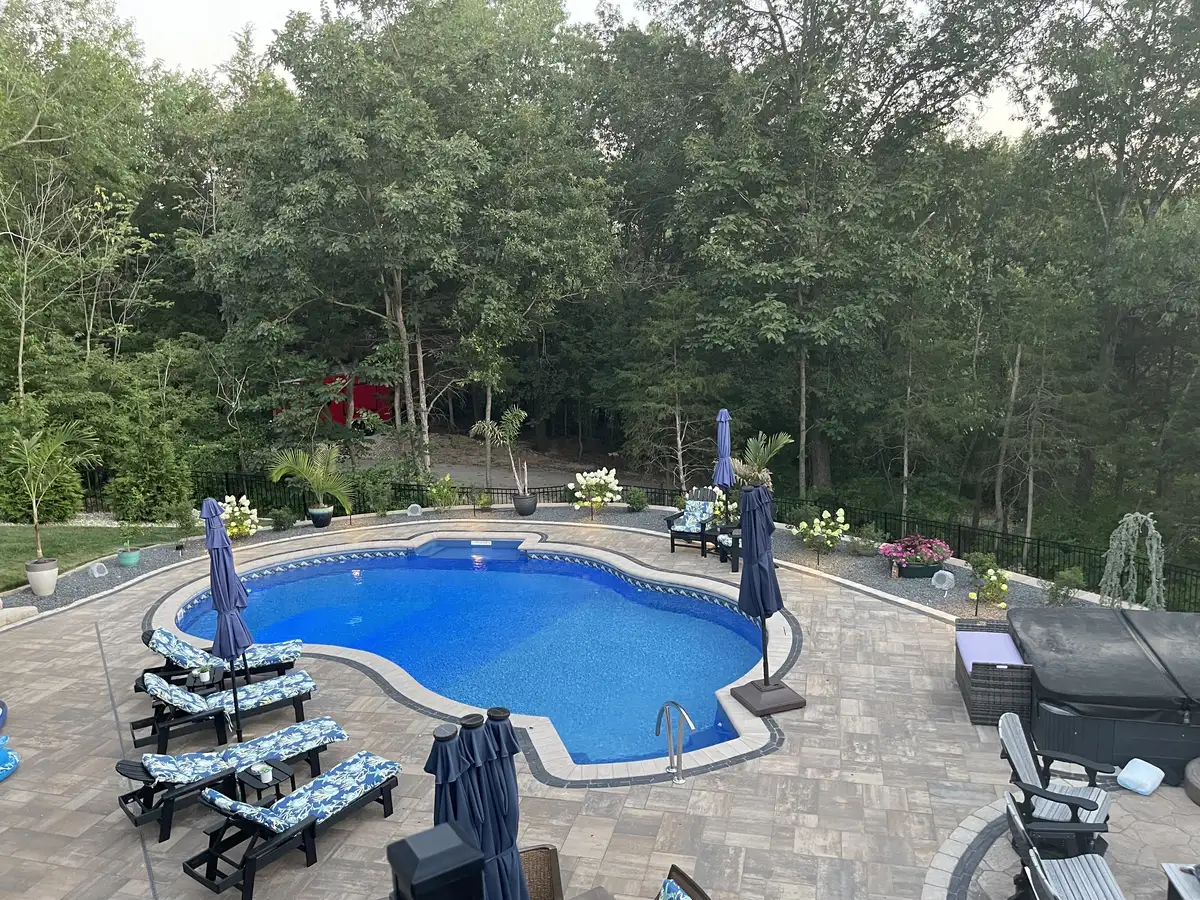
A pool deck has to support wet barefoot circulation, furniture, repeated sun exposure, splash, drainage, and seasonal weather. Those demands make surface texture, temperature, edge details, and maintenance just as important as color and pattern.
Choosing a pool-deck material is not just about looks. Compare surface texture when wet, heat exposure, coping compatibility, drainage, maintenance, availability, current product specifications, and the way the deck connects to the yard.
Pavers and Poured Concrete: Compare the Complete Systems
Poured concrete, concrete pavers, natural stone, and porcelain each have different jointing, preparation, repair, maintenance, and appearance considerations. Any exterior surface can be affected by site preparation, drainage, settlement, moisture, weather, and maintenance, so compare complete systems rather than relying on a universal lifespan.
Paver decks use individual units and joints, while poured concrete forms larger slabs with control joints. Compare how each proposed system addresses base preparation, drainage, movement, joint upkeep, finish, and access for future repairs.
Individual units may allow localized replacement, but matching an aged surface and correcting the cause of damage can still require broader work. Ask how repairs would be approached for the exact material and installation.
Best Pool Deck Paver Materials for Missouri
Concrete Pavers (Interlocking)
Concrete interlocking pavers are one option for St. Louis pool decks. Available colors, shapes, textures, and surface characteristics vary by manufacturer and product line, so compare current samples and published product information before choosing. The best fit depends on the pool edge, drainage, circulation space, and the look you want.
For a pool deck, review the exact product's published wet-surface characteristics, intended application, maintenance instructions, and sample texture. No outdoor surface is slip-proof, and coatings or sealers can change how it feels underfoot.
Concrete-paver budget: Price the exact paver line, deck dimensions, pattern, cuts, access, preparation, drainage, joint system, and coping transitions.
Natural Stone (Travertine)
Travertine can create a light, natural-stone look around a pool. Surface temperature varies with color, solar exposure, moisture, finish, and weather, so compare physical samples in conditions similar to your yard rather than relying on a universal temperature claim.
Ask about staining, scratching, salt or chemical exposure, compatible cleaning, sealing guidance, winter care, and replacement availability for the exact stone. Maintenance intervals depend on the material, treatment, exposure, and use.
Natural-stone budget: Include stone grade and finish, thickness, waste, delivery, support system, drainage, sealing guidance, and pool-edge details.
Porcelain Pavers
Porcelain pavers can provide a crisp, contemporary surface in formats that vary by manufacturer. Review current product data for outdoor and pool-deck suitability, wet-surface characteristics, thickness, support method, edge treatment, and climate limitations.
Porcelain system details can differ from conventional concrete pavers. Confirm the approved setting method, substrate, drainage, movement joints, coping connection, cutting requirements, and installer scope for the selected product.
Porcelain budget: Include the approved support system, cutting, edge treatment, drainage, movement joints, access, and coping connection for the selected slab.
Pool Deck Paver Patterns That Work
Running Bond
Running bond arranges compatible rectangular units in offset rows for a linear look. Suitability, cuts, waste, labor, and visual scale depend on the selected paver, deck geometry, border, and pool edge.
Herringbone
Pavers are laid at 45 or 90-degree angles to create a zigzag pattern. Herringbone can create a strong visual rhythm around a pool, but pattern suitability depends on the selected paver system, base, edge restraint, expected loads, cuts, and current manufacturer specifications. Compare it with simpler layouts for your pool deck before deciding.
Random Ashlar
A mix of two or three paver sizes laid in a seemingly random pattern that actually follows a repeating module. This pattern mimics the look of natural flagstone and works particularly well with tumbled or textured pavers. It hides imperfections and creates visual interest that a uniform pattern cannot match.
Border and Field
A contrasting paver color or size runs around the perimeter of the pool deck while a different paver fills the interior field. This pattern defines the space architecturally and can be used to create a visual safety border around the pool edge -- a practical benefit that also looks intentional and designed.
Pool Deck Design Considerations for St. Louis
Drainage path. Finished elevations and slope should coordinate with the pool edge, house, gates, surrounding grades, and a lawful discharge location. The appropriate pitch or drain detail depends on the site, surface, and applicable requirements.
Coping integration. Pool-edge materials and profiles vary by pool system and product line. Compare compatible coping options, dimensions, texture, transitions, manufacturer requirements, and coordination responsibilities with the pool provider.
Color selection. Color and solar exposure can affect surface temperature and glare. Compare samples in sun and shade, and consider how the deck will feel during the hours you expect to use the pool.
Transitions and movement joints. Details where paving meets coping, the house, steps, or retaining walls should follow the selected systems and project design. Do not assume one joint width or filler works everywhere.
How Much Does a Pool Deck Cost in St. Louis?
A useful pool-deck estimate starts with measured area and a defined layout, then identifies demolition, preparation, drainage, deck material, jointing, coping transitions, cuts, access, restoration, and any integrated walls or gathering features. Curves, narrow access, material format, pool-edge details, and repairs to adjacent areas can materially change the scope.
Maintaining Your Pool Deck
Maintenance depends on the selected surface, joint material, exposure, drainage, stains, and any coating. Use this as an inspection checklist and follow the current manufacturer guidance for the products on your deck.
Spring. Inspect the surface, joints, edges, drains, and coping. Choose a cleaning method and pressure that are compatible with the material and avoid disturbing sound joints.
Summer. Keep the deck clean, address standing water, and follow the selected paver and sealer manufacturer guidance for stains, joint care, and any compatible protective treatment.
Fall. Remove leaves and organic debris, keep drainage paths open, and address stains using methods approved for the surface.
The Bottom Line
Choose a pool-deck surface by barefoot comfort, slip characteristics, drainage, maintenance, appearance, and the published requirements for the exact product. Concrete pavers, natural stone, and porcelain each involve different tradeoffs.
Green Operations plans pool decks and custom patios throughout St. Louis, Jefferson County, and St. Charles County. Request a project estimate or call (314) 630-8814 to discuss the deck layout, coping transitions, drainage, and material options around your pool.