
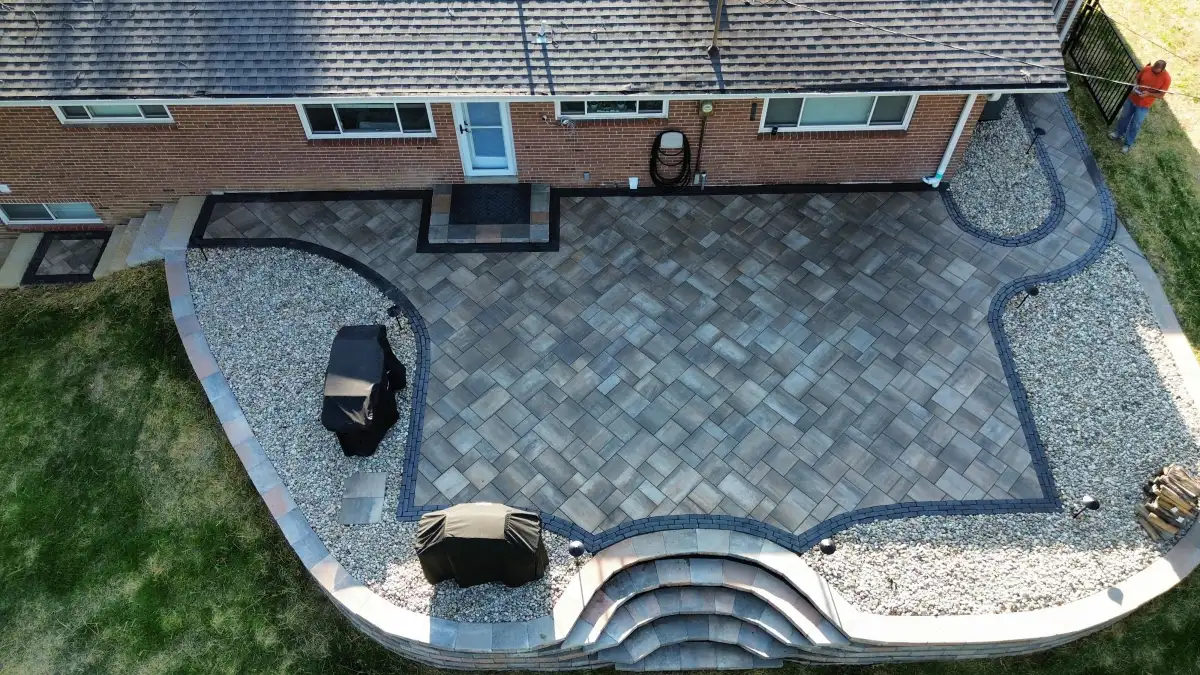
Plan Your St. Louis Backyard for Spring
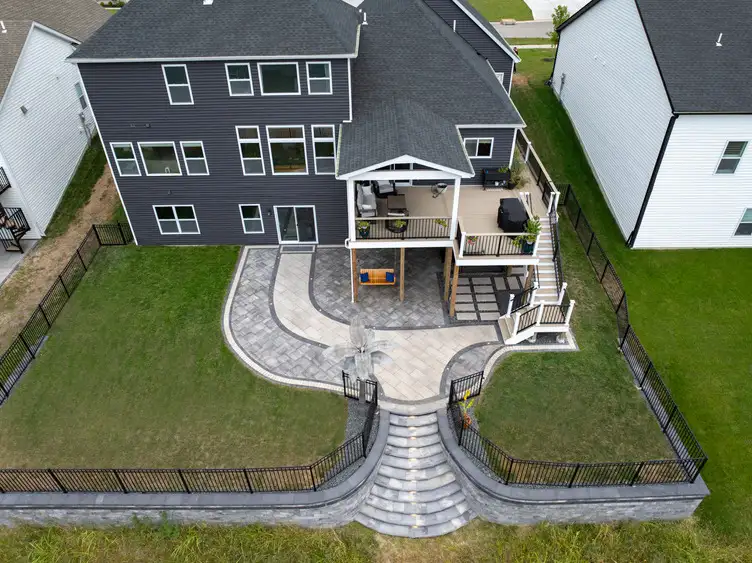
Start planning early enough to settle the layout, material choices, utilities, access, and any required approvals before your preferred construction window. Contractor availability and municipal review times change throughout the year, so request current scheduling information.
Early planning gives you time to compare layouts, resolve utilities and approvals, review material samples, and ask contractors for current availability. Use the steps below to build a useful brief for your property without assuming a guaranteed season or construction timeline.
Start With How You Actually Use Your Yard
Before thinking about materials, layouts, or costs, spend a week paying attention to how your family uses your backyard right now. Where do people naturally gather? Where does the sun hit in the evening? Where is the shade? Which direction does the wind typically come from? These observations tell you more about ideal patio placement than any Pinterest board.
Most St. Louis homeowners want some combination of these outdoor functions:
- Cooking and grilling. If carrying food between the indoor kitchen and a grill is frustrating, compare an outdoor counter, storage, appliance, and dining layout that keeps the activities connected. Explore how an outdoor living space can bring cooking, dining, and entertaining together.
- Dining and entertaining. A flat, level patio area sized for a table and 6 to 8 chairs is the base for most backyard designs. It needs to be close enough to the kitchen (indoor or outdoor) for convenience but positioned where the evening light is pleasant.
- Fire and relaxation. A fire pit or fireplace can make cool evenings more comfortable when its fuel type, clearances, seating, and circulation are planned safely.
- Kids and recreation. If your family includes children, consider sight lines between the main gathering area and play space. Grade changes, steps, walls, gates, and pool barriers need property-specific planning.
- Pool integration. A pool is a major investment, and the hardscaping around it matters just as much as the pool itself. The deck material, drainage, retaining walls, and surrounding outdoor living features all need to work together. Our pool hardscaping services cover the full picture.
Write down your priorities in order. It is fine to want all of these things, but knowing which ones matter most helps us design a space that nails the essentials and leaves room to add features later if budget is a factor.
Assess Your Property Before You Design
St. Louis yards have quirks that flat-terrain cities do not. The rolling hills, clay-heavy soil, and drainage patterns across Jefferson County, St. Charles County, and the greater metro area all influence what is realistic and what will last. Before sketching any layouts, you need an honest assessment of your property.
Grade and Slope
Many St. Louis properties have significant grade changes. A yard that slopes 3 or 4 feet from the house to the back fence is common, especially in neighborhoods built on the hills south of I-44, in Mehlville, Oakville, Fenton, and throughout Jefferson County. That grade change is not a problem -- it is actually an advantage. Tiered patios built into a slope create natural separation between zones: a raised dining area stepping down to a sunken fire pit lounge, for instance. The retaining walls that hold back the earth double as seating walls, planter beds, and design features.
If your property has a meaningful grade change, ask whether the layout can follow the slope or whether a retaining wall, steps, or another transition should be evaluated. Read our retaining wall guide for project-specific comparison questions.
Drainage and Water Flow
Watch your yard during rain. Where does water collect, where does it flow, and where do downspouts discharge? Record those conditions so drainage, lawful outlets, adjoining grades, and the proposed outdoor features can be reviewed together.
Proper drainage design routes water away from structures using a combination of grade, channel drains, French drains, and downspout extensions. We address drainage in the design phase, not as an afterthought. The cost of doing it right during construction is a fraction of fixing water problems later.
Sun Exposure and Wind
St. Louis summers are no joke. Highs regularly hit the mid-90s with humidity that makes it feel over 100. If your ideal patio location gets full afternoon sun from the west, you will need shade -- a pergola, a shade sail, or strategic tree placement. Conversely, a patio in deep north-facing shade stays damp longer after rain and may not dry well in spring and fall.
There is no universally best patio orientation. Observe sun and shade at the times you expect to use the space, then consider the house, trees, slope, doors, prevailing exposure, and shade options before choosing a location.
Choose Your Materials Early
Material selection drives the design, the timeline, and the budget. In St. Louis, the most common patio and hardscaping materials are:
| Material | Pros | Cons | Cost Range |
|---|---|---|---|
| Concrete pavers | Durable, wide variety, repairable | Higher upfront cost than poured concrete | Price from final scope |
| Natural stone | Unique look, high-end feel | Irregular sizes, higher labor cost | Price from final scope |
| Poured concrete | Affordable, fast installation | Cracks over time, limited design options | Price from final scope |
| Stamped concrete | Mimics pavers or stone at lower cost | Fades, cracks, slippery when wet | Price from final scope |
Concrete pavers are one option for St. Louis outdoor living projects, alongside natural stone and other site-appropriate surfaces. If you are considering Unilock, compare the current product specifications, available colors and textures, traffic rating, maintenance guidance, and written manufacturer warranty for the exact product. The selection should fit the intended use and site conditions, not simply a brand name.
Concrete pavers and poured concrete respond differently to joints, movement, repairs, drainage, and winter exposure. Compare the complete system, site preparation, maintenance, finish, and repair approach for your property rather than assuming one material has a universal lifespan advantage. For estimate factors, read the paver patio cost guide.
Plan Your Project in Phases If Needed
Not every backyard transformation has to happen all at once. Phasing can spread decisions and costs over time, but the sequence should account for access, grades, utilities, drainage, and how later work could affect finished areas.
A practical phasing plan for a full backyard transformation might look like this:
- Phase 1 (this spring/summer): Patio, retaining walls, and basic grading. This is the base -- get the flat surfaces, the grade changes, and the drainage right first. Budget: price this phase from its dimensions, materials, and site work.
- Phase 2 (next year): Outdoor kitchen island, fire pit, and seating walls. These features build on the patio base and transform it from a nice flat surface into a true living space. Budget: price this phase from its dimensions, materials, and site work.
- Phase 3 (year three): Landscape lighting, plantings, pergola, and finishing touches. The final layer makes everything look intentional and polished. Budget: price this phase from its dimensions, materials, and site work.
For a phased project, identify likely future features before approving the first layout. Ask what provisions are practical now, what must wait for a later design, and how future access or construction could affect completed work.
St. Louis Spring Weather and Construction Timelines
St. Louis spring weather is unpredictable. April and May can bring stretches of perfect 70-degree days interrupted by severe thunderstorms that drop 2 inches of rain overnight. This affects construction timelines, and it is something every homeowner should plan for.
Here is a realistic timeline for a typical spring project in St. Louis:
- Design and planning: Allow time for measurements, layout decisions, material selection, utility planning, and revisions.
- Permitting, when required: Confirm current requirements and review timing with the authority having jurisdiction.
- Material ordering: Confirm current availability and lead times after the final selections are approved.
- Construction: Ask for a sequence and duration based on the final scope, access, site work, and material plan.
- Weather buffer: Discuss which site or weather conditions can pause excavation, compaction, installation, or curing.
Working backward from a Memorial Day target, you would want to start the design process by mid-to-late April. Working backward from July 4th gives you until early May. Either way, the sooner you start, the more flexibility you have with scheduling, material availability, and design changes.
What to Look for in a Contractor
A backyard project is a significant investment. Choose a contractor who can clearly explain how the design, base preparation, drainage, materials, schedule, and warranty will protect that investment over time.
- A site-specific review. Ask what the contractor observed about soil, grade, drainage, downspouts, access, existing surfaces, and the way you plan to use the space.
- Base preparation tied to the selected system. Ask the proposal to explain excavation, base materials and depth, compaction, bedding, edge restraint, expected loads, drainage, soil conditions, and the current specifications that apply to the chosen paving system. Fixed depths are not appropriate for every property or application.
- Product-specific scope. Confirm the named product, current manufacturer requirements, installation details, care guidance, and warranty terms that apply to the actual proposal.
- Insurance and references. Ask for current documentation relevant to the project and recent references appropriate to the type of work.
- Written proposals with detail. A professional proposal should specify materials (brand, product name, color), base preparation specs, drainage plan, project timeline, and warranty terms. A one-page "estimate" with a total number and nothing else is a red flag.
Get Started on Your Spring Project
Spring in St. Louis moves fast. The trees leaf out, the azaleas bloom along the Meramec, the Cardinals start playing at Busch Stadium, and suddenly it is June. If a backyard transformation is on your list this year, the planning starts now.
Share your priorities, site constraints, budget direction, and desired phases with Green Operations. A project-specific estimate can organize the work you want to consider now and the elements you may reserve for later.
Call us at (314) 630-8814 or request a project estimate online.
Browse our paver patio services, explore outdoor living options, or check out our project gallery for inspiration from real St. Louis backyards.