
A practical St. Louis guide to layout, cost, weather, and everyday use
A useful outdoor kitchen starts with the way you cook, not the longest appliance list. For many St. Louis backyards, a well-placed grill, durable prep surface, storage, and room to serve food will do more than an oversized island that crowds the patio. The plan also has to account for drainage, utilities, heat clearance, and winter exposure before construction begins.
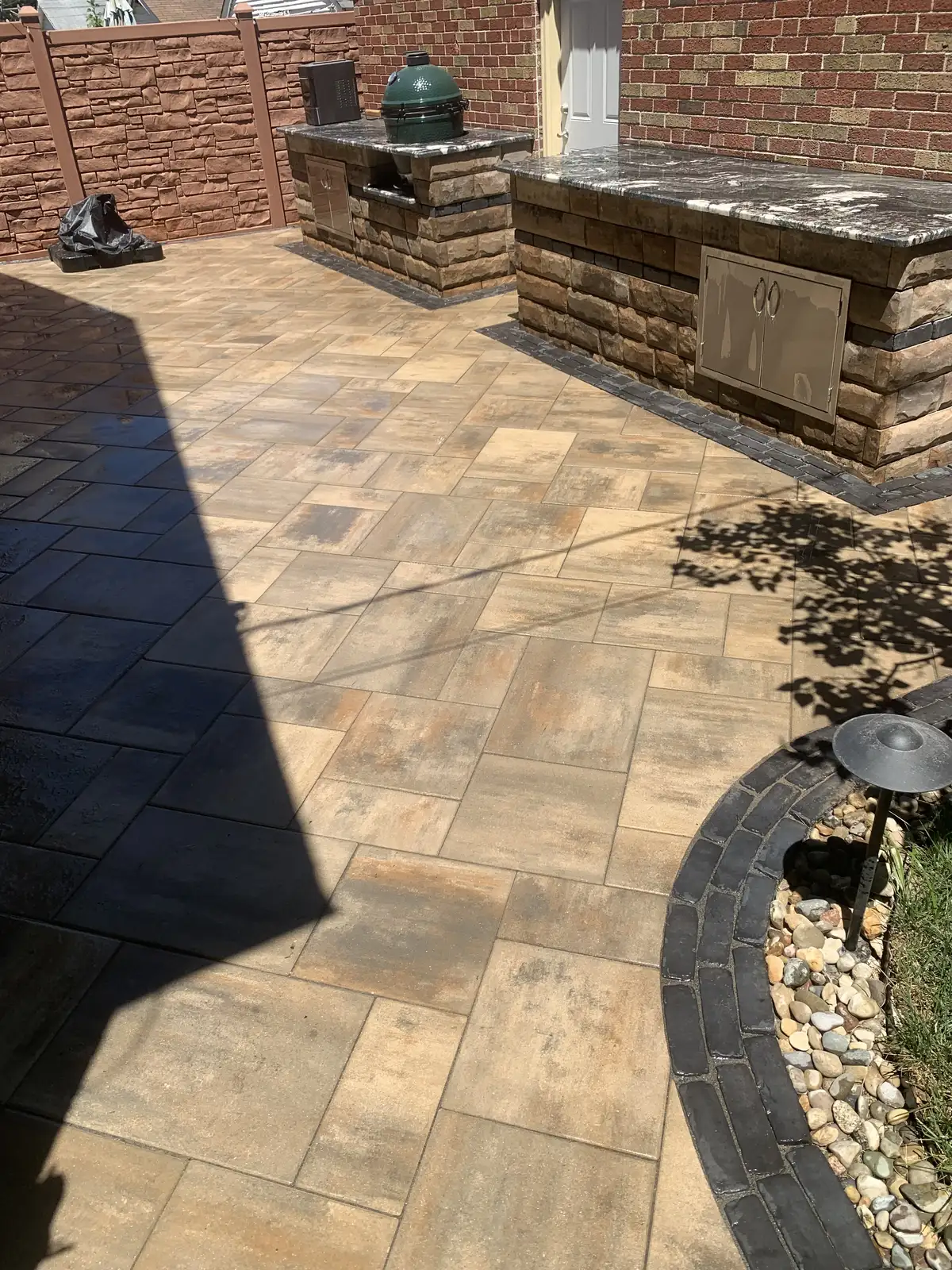
Green Operations designs and builds outdoor kitchens in the St. Louis area as part of the surrounding hardscape. That makes it possible to coordinate the kitchen with your patio, steps, seating, lighting, and future outdoor-living plans instead of treating each feature as a separate add-on.
Start with three decisions: what you cook most often, how many people usually gather, and which features would save you repeated trips back inside. Those answers help define the right layout and a more disciplined budget.
Choose an outdoor kitchen layout around cooking and traffic
Before choosing an island shape, trace the route from your back door to the grill, dining table, pool, steps, and seating. The cook needs working room, but guests also need a clear path that does not pass through heat, smoke, open appliance doors, or a tight corner.
Straight grill station
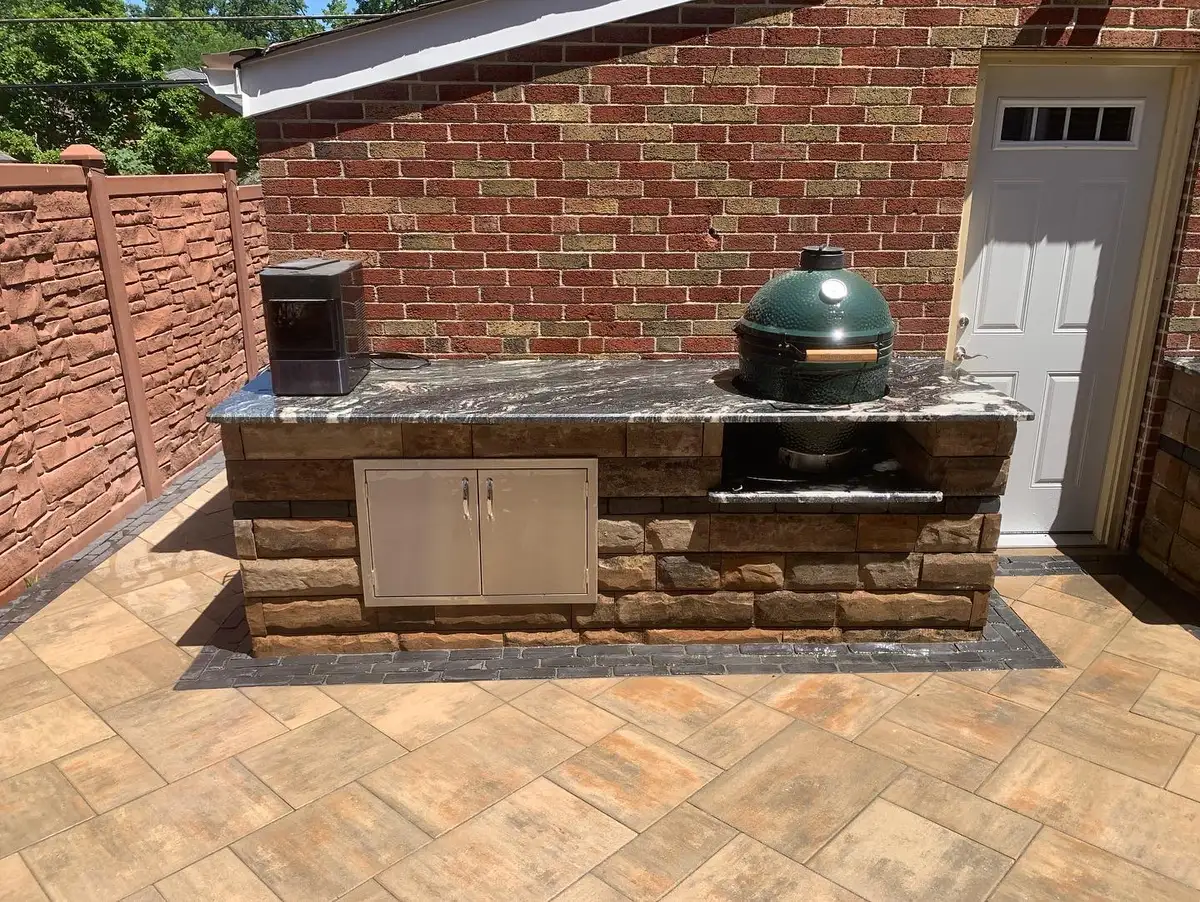
A straight run keeps the cooking area compact and leaves more of the patio open for dining and seating. It can hold a primary cooker, landing counter, and storage without forcing a small yard to support a full room-sized kitchen.
L-shaped kitchen
An L-shape separates cooking from serving and creates a natural corner for prep. It can also support bar seating on the guest-facing side, provided there is enough clearance behind the cook and enough room for people to pass.
Island or U-shaped kitchen
Larger layouts can add counter space and make the cook part of the conversation, but they require more patio area and careful traffic planning. They make the most sense when the extra sides serve a real purpose, such as a second cooker, sink, storage, or seating—not simply to make the kitchen look bigger.
Plan the patio base, drainage, and utilities first
An outdoor kitchen adds concentrated weight and creates fixed edges around a working area. The supporting surface needs to be stable, level where the island sits, and coordinated with the pitch that moves water away from the house. If the kitchen is part of a new paver patio, the island footprint, utility paths, edge restraint, and drainage should be resolved before the pavers are installed.
Water that cannot soak into the ground moves across yards and paved surfaces into the regional drainage system, as the Metropolitan St. Louis Sewer District explains. That local reality matters around counters, appliance openings, seating, and downspouts. A layout that looks good on paper can be frustrating if runoff collects at your feet or flows toward the house.
Gas, electric, and water also need early decisions. Even if a sink or refrigerator is a later phase, discussing it before construction can prevent avoidable demolition. Utility work should remain accessible for shutoff and service, and appliance clearances should follow the manufacturer's instructions.
Choose materials and appliances for outdoor exposure
Missouri temperature swings and moisture reward materials selected for exterior use. The island surround, counter, joints, fasteners, storage, and appliances all need to tolerate weather and regular cleaning. Ask how each surface handles heat, stains, water, freezing conditions, and the maintenance you are willing to do.
Start with one primary cooker and useful landing space on both the food-in and food-out sides. Add only the appliances that match your habits:
- Gas grill: quick startup and familiar temperature control for frequent weeknight cooking.
- Smoker or ceramic cooker: longer cooks that need a heat-safe opening, lid clearance, and a place for tools.
- Pizza oven: a deeper, heat-aware setup with nearby room for dough, toppings, and finished food.
- Refrigeration or sink: fewer trips indoors, balanced against utility work, winter care, and maintenance.
- Storage: weather-resistant access for tools and supplies without blocking service panels.
What affects outdoor kitchen cost in St. Louis?
There is no honest one-price answer without seeing the site and defining the scope. The largest cost drivers are the island size and shape, appliance package, counter and surround materials, utility runs, patio condition, access, drainage, and any retaining or shade structure included in the plan.
A focused grill station on a suitable existing patio is a different project from a kitchen built into a new multi-level terrace. Ask for an itemized estimate that separates the kitchen, appliances, utilities, patio work, and optional features. If a new foundation or dining surface is part of the plan, the St. Louis paver patio cost guide explains the site factors behind that portion of the work.
Is $10,000 enough? A budget figure alone cannot establish what will fit your yard. Define the cooking appliance, counter space, utilities, finishes, site preparation, and any patio work, then request an itemized estimate for that exact scope.
Check permits and trade requirements before construction
Permit and inspection requirements vary by municipality and by what the project includes. A masonry island, covered structure, gas line, electrical circuit, and plumbing connection may be treated differently. Confirm the applicable rules with the local authority before construction, and use qualified trades where the work requires them.
This is another reason to finalize the appliance list early. Moving a grill opening is much easier on a drawing than after the counters, veneer, and patio are complete. Green Operations coordinates utility considerations within its outdoor living projects so the hardscape and cooking area are planned together.
Understand the tradeoffs before you build
An outdoor kitchen can make dinner and entertaining easier, but it also adds exposed equipment and surfaces to maintain. Water lines need cold-weather care, grease and food residue need regular cleaning, and appliance covers must be used according to the manufacturer's guidance so they do not trap damaging moisture.
The kitchen also occupies patio space year-round. A design that is too large can reduce flexible seating, interrupt the route to the yard, or put guests too close to heat and smoke. A simpler layout with strong prep space often works better than filling every opening with an appliance.
Make the cooking area comfortable after sunset
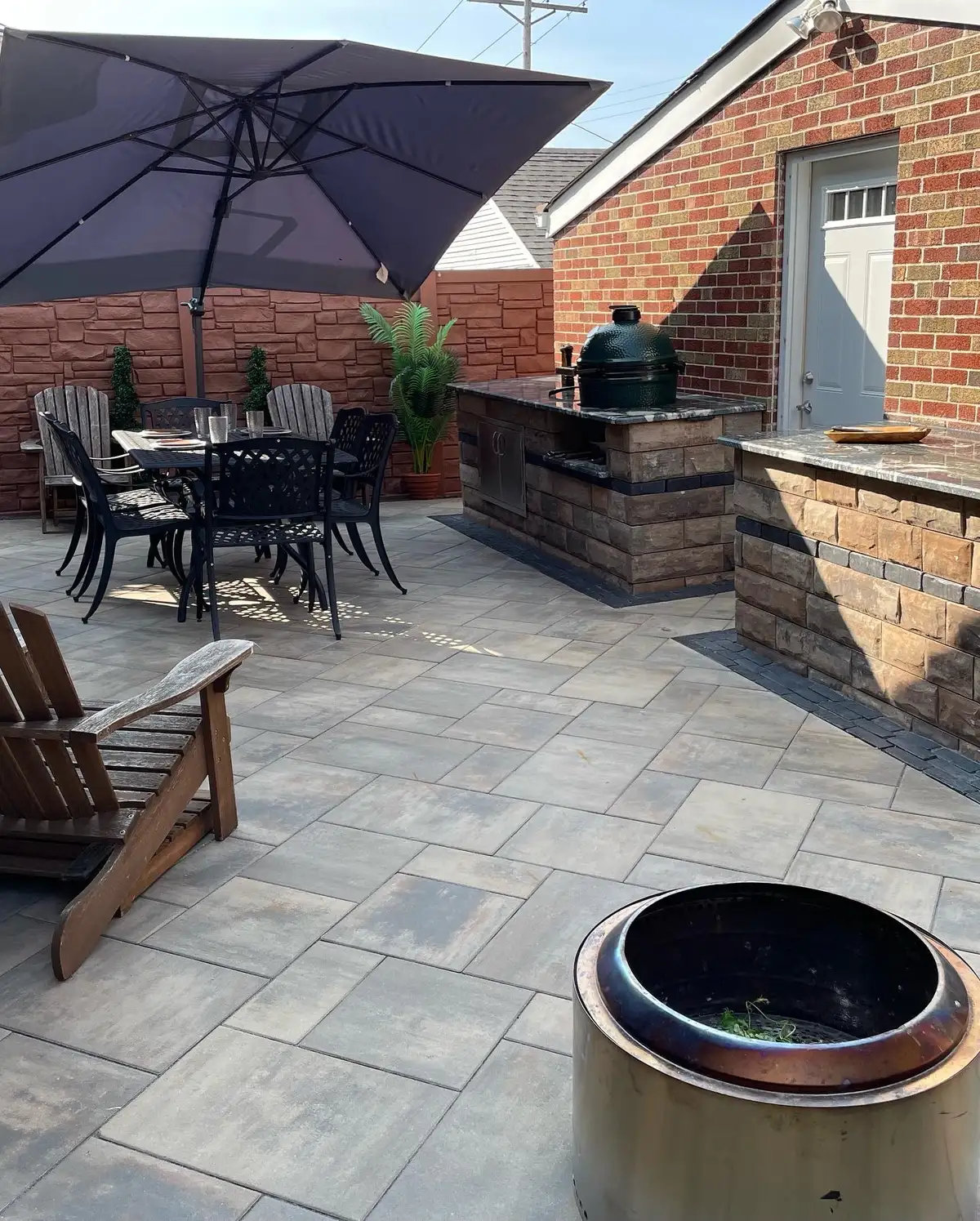
Shade, lighting, seating, and seasonal comfort determine how often the kitchen gets used. A covered or shaded zone can make summer cooking more comfortable, while task lighting at the grill and low-level lighting near steps improve evening use. A nearby fire feature can support cooler-weather gatherings as long as the cooking and seating zones remain safely separated.
Think in connected zones: cooking, serving, dining, and relaxing. Our St. Louis outdoor living ideas show how kitchens can relate to fire features and seating, while the landscape lighting guide covers practical ways to illuminate paths, steps, and gathering areas.
Frequently Asked Questions
Outdoor Kitchen Planning Questions
How much should I expect to pay for an outdoor kitchen?
Cost depends on the island size, appliance package, counter and surround materials, utilities, access, drainage, and whether the project also needs a new patio or retaining work. A site-specific written estimate is more useful than a broad online range.
Is $10,000 enough for an outdoor kitchen?
A budget figure alone cannot establish what will fit your yard. Define the cooking appliance, counter space, utilities, finishes, site preparation, and any patio work, then request an itemized estimate for that exact scope.
What are the disadvantages of an outdoor kitchen?
The tradeoffs include upfront construction cost, space taken from the patio, maintenance for exposed appliances and counters, and winter care for any water lines. A poor layout can also interrupt traffic or put guests too close to heat and smoke.
Do I need a permit for an outdoor kitchen in the St. Louis area?
Requirements vary by municipality and scope. Permanent structures and gas, electrical, or plumbing work may trigger different permits or inspections. Confirm the rules with the local authority before construction and use qualified trades where required.
How much does an outdoor kitchen increase home value?
An outdoor kitchen can make a backyard more useful and appealing, but no resale return is guaranteed. Value depends on the market, build quality, condition, layout, and whether the features suit a future buyer. Plan first for how your household will use it.
How do I protect an outdoor kitchen through a Missouri winter?
Follow each appliance manufacturer's care instructions, clean grease and food residue, cover equipment only as recommended, shut down and drain water lines before freezing weather, and address open joints, damaged surfaces, or drainage problems before winter.
Plan an outdoor kitchen around your backyard
Green Operations serves homeowners in St. Louis, Jefferson County, and St. Charles County. Tell us what you want to cook, how you entertain, what is already in the yard, and which features matter most. We will review the site and provide a project-specific estimate.